E.l.f. Beauty Inc. raises full-year outlook for second consecutive quarter following 51% surge in fiscal Q2 2027 net sales

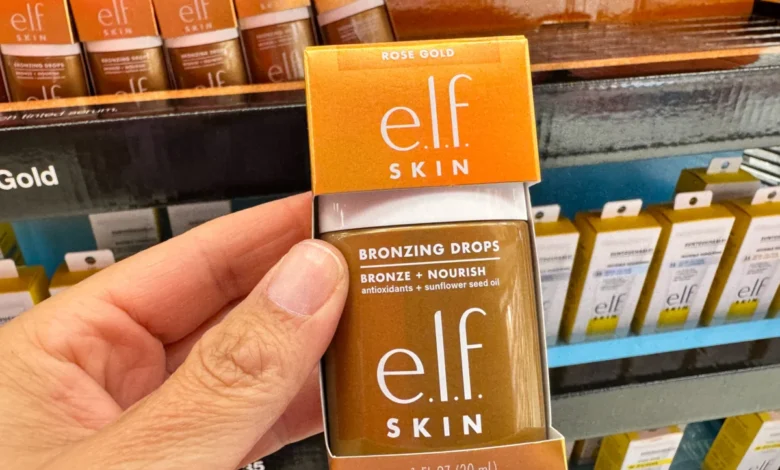
E.l.f. Beauty Inc. has officially announced a significant upward revision to its full-year financial outlook, marking the second consecutive quarter of improved guidance. This robust performance is underpinned by a 51% year-over-year increase in net sales for the fiscal second quarter of 2027, which concluded on September 30. The company reported net sales of $520.8 million, a substantial leap from the $343.9 million recorded during the same period in the previous fiscal year. This milestone represents the 31st consecutive quarter of net sales growth for the beauty conglomerate, a streak that underscores the brand’s enduring resonance with a diverse consumer base.
The momentum driving these figures stems from a multi-pronged growth strategy, most notably the high-profile European retail debut of the Rhode brand at Sephora and a marked resurgence in unit sales for the core e.l.f. cosmetics line. As the company continues to solidify its footprint in the competitive beauty landscape, its performance stands as a testament to the effectiveness of its "connected commerce" model, which integrates traditional retail partnerships with aggressive digital and social media engagement.
A Chronology of Strategic Expansion
To understand the current financial trajectory of E.l.f. Beauty, it is necessary to examine the series of strategic maneuvers that have defined the company’s recent history. Since the acquisition of Rhode in August 2025, the company has worked to integrate the brand into its global ecosystem while maintaining its distinct market position.
The timeline of E.l.f.’s recent growth is punctuated by several key events:
- August 2025: E.l.f. Beauty officially completes the acquisition of Rhode, signaling a shift toward a broader, premium-adjacent portfolio.
- May 2026: Market analysis confirms that international sales represent approximately 20% of the company’s total revenue, setting the stage for an aggressive push into European and Asian markets.
- July 2026: The company launches "e.l.f. Hair," a value-driven hair care line, which quickly gains traction at Target stores.
- September 2026: Rhode makes its monumental debut in 19 European countries through an exclusive partnership with Sephora, contributing significantly to the current fiscal quarter’s success.
- October 2026: E.l.f. introduces "e.l.f. Pop," a specialized fragrance and body care collection, signaling the company’s intent to diversify its product categories beyond traditional color cosmetics.
Data-Driven Growth and Market Penetration
The financial data released in the fiscal Q2 2027 report reveals a company operating at a high level of efficiency. Organic net sales rose by approximately 35%, according to Chief Financial Officer Mandy Fields. The inclusion of Rhode, which contributed roughly 16 percentage points to total growth in the period leading up to the one-year anniversary of the acquisition, provided a critical tailwind.
Furthermore, the company’s "connected commerce" strategy—a term E.l.f. uses to describe the seamless integration of sales through digital platforms, social commerce, and online marketplaces—accounted for 31% of total sales in the second quarter. E.l.f. currently holds the top position for cosmetics brands on Amazon and is recognized as the most-searched beauty brand on the platform. On TikTok Shop, the company’s position as the number two cosmetics brand highlights its ability to convert social media trends into tangible revenue.
The international expansion strategy is also yielding dividends. E.l.f. reported that international net sales grew by 165% in the second quarter, while U.S. sales saw a steady increase of 25%. This shift in the geographic mix of revenue is a significant departure from previous years; international sales now account for roughly 25% of the trailing 12-month revenue. CEO Tarang Amin has noted that while this is a substantial improvement, there remains significant "runway," as legacy beauty companies typically generate upwards of 70% of their sales in foreign markets.
The Impact of Strategic Product Diversification
E.l.f. is increasingly utilizing its digital-first approach to test new product categories before committing to widespread physical retail distribution. The launch of e.l.f. Hair, which debuted in July, serves as a prime example. By launching a six-product assortment priced under $10 exclusively at Target, the company was able to capture immediate market share. Within months, the brand established itself as one of Target’s top 20 hair care lines, with an impressive 50% of the customer base being entirely new to the e.l.f. ecosystem.
The launch of the e.l.f. Pop fragrance and body collection in October further illustrates the company’s agility. By bypassing traditional brick-and-mortar rollouts in favor of an exclusive debut on Amazon and TikTok Shop, the company minimized inventory risk while maximizing consumer reach. These digital-first launches allow the company to gather real-time data on consumer preferences, which then informs the long-term planning for broader retail distribution.
Official Outlook and Future Projections
Following the strong Q2 performance, E.l.f. Beauty has raised its full-year fiscal 2027 net sales growth forecast to a range of 22% to 24%. This is a notable increase from the 18% to 20% projection issued in the previous quarter, and a significant jump from the 12% to 14% forecast provided in May.
However, management has signaled that the pace of growth may moderate in the second half of the year. The company expects growth to settle into the 7% to 10% range for the final two quarters. CFO Mandy Fields explained that this deceleration is not a sign of weakness, but rather a reflection of the "difficult comparisons" created by a year of aggressive expansion. The second half of fiscal 2027 will be measured against a period in 2026 that included:
- The expansion of shelf space at Ulta Beauty.
- The launch of e.l.f. in German retail chain dm.
- The introduction of Rhode at MECCA in Australia and New Zealand.
- The successful rollout of Naturium at Walmart.
Despite the projected slowdown, the company maintains that its growth rate of 7% to 10% significantly outpaces the broader beauty category, which is currently experiencing growth in the low-single digits.
Broader Market Implications
The success of E.l.f. Beauty serves as a case study in modern retail agility. By successfully blending high-volume, low-cost cosmetics with premium, trend-focused acquisitions like Rhode, the company has insulated itself from the volatility that often impacts mid-tier beauty brands.
The ability to maintain consistent, double-digit growth for 31 consecutive quarters is rare in the consumer goods sector. It indicates that the company has successfully transcended its identity as a "value brand" to become a dominant lifestyle player. Furthermore, the company’s ability to drive high engagement on social commerce platforms like TikTok Shop provides a blueprint for other retailers struggling to bridge the gap between digital content and conversion.
As E.l.f. continues to increase its international presence, the challenges will shift toward logistics, regional regulatory compliance, and managing the brand’s identity across diverse cultures. However, the current data suggests that the company’s management team is well-positioned to navigate these hurdles. With a robust pipeline of new products and an increasingly global retail footprint, E.l.f. Beauty remains a bellwether for the future of the beauty industry—a future that is defined by speed, digital integration, and an relentless focus on consumer accessibility.
As the industry moves toward the conclusion of the 2027 fiscal year, market observers will be watching closely to see if the company can sustain its momentum in its more mature international markets and whether the "e.l.f. Pop" and hair care lines can achieve the same level of ubiquity as the brand’s foundational cosmetics. For now, the company’s consistent performance suggests that its strategic pivots are not only meeting but exceeding market expectations.